Reviewing Keep Your Heels SVG for Embroidery
As a designer who spends half my life digitizing and the other half stitching, I have learned that not every cute graphic translates well to thread. We often fall in love with a concept on screen, only to watch it puckers or lose definition under the needle. Recently, I pulled up the Keep Your Heels, SVG Quote files to evaluate their potential for real-world application. This isn’t just about whether the quote is catchy; it is about whether the geometry, spacing, and visual weight can survive the physical constraints of embroidery.
First Impressions and Visual Personality
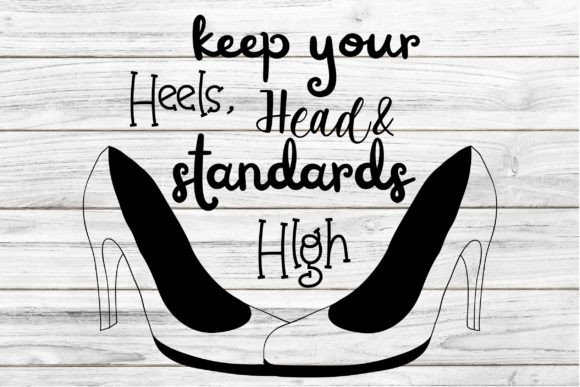
The phrase itself carries a bold, confident energy. It suggests resilience, style, and a bit of attitude. Visually, the design relies heavily on typography. In the world of Graphics and digital art, text-based designs are deceptively simple. On screen, they look crisp. In embroidery, they are minefields of potential distortion if the kerning is too tight or the font strokes are too thin.
My initial review of the Keep Your Heels, SVG Quote focused on the stroke width. Since these are vector-based files (SVG and AI), the scalability is excellent. However, for embroidery, we need to consider how those lines translate to stitch paths. The design feels modern and clean, which is a double-edged sword. Clean lines require precise tension and high-quality stabilizer to maintain their sharpness. There is no intricate shading to hide behind; the impact comes entirely from clarity and contrast.
Real-World Application Scenarios
I imagined this design on a few specific products to test its versatility. The most natural fit seemed to be a canvas tote bag design. The sturdy fabric provides a stable base for the text, and the message aligns perfectly with the demographic that shops for reusable, statement bags. Here, the design would likely need a combination of fill stitch for larger letters and perhaps a satin stitch border to define the edges against the textured weave of the canvas.
Another strong contender was sweatshirt embroidery. A crewneck sweatshirt offers a large, flat surface area on the chest or back. Placing the quote across the chest in a medium hoop size could create a boutique-style look. However, fleece and cotton blends can be tricky. The pile of the fabric might swallow smaller details, so I would recommend testing the scale carefully. If the letters are too small, they will get lost in the fuzz. If they are too large, the density might cause the garment to stiffen uncomfortably.
I also considered custom apparel like structured caps. This is where I paused. Curved surfaces distort text. Unless the design is specifically arched or digitized with pull compensation in mind, straight text on a cap panel can look warped. For a beginner or someone using pre-made digital files, I would advise sticking to flat items like aprons, pillow covers, or tea towels unless you have advanced digitizing skills to adjust the pathing.
Technical Considerations for Stitching
When working with a machine embroidery design that is primarily text, stitch density is your biggest variable. Too dense, and you risk needle breaks, thread shredding, and fabric puckering. Too light, and the backing shows through, ruining the professional finish. Since the product description notes that the original images are available in SVG, AI, and PNG formats at 300ppi, you have flexibility. However, remember that these are graphic files, not necessarily native embroidery machine files like PES or DST.
This distinction is crucial. You will likely need to use embroidery software to convert the SVG or AI vectors into stitch data. This gives you control. You can decide whether to use a running stitch for a sketchy, hand-drawn feel or a solid fill for maximum impact. I strongly recommend checking the hoop size requirements before you start. Ensure your design fits within your machine’s maximum area without needing to re-hoop, which can lead to alignment issues.
Fabric choice matters immensely. For dark fabrics, you must consider thread color contrast. A white or metallic thread would pop beautifully against navy or black, enhancing the "heels" metaphor with a touch of glamour. For light fabrics, ensure your thread has enough saturation. Always use a proper stabilizer. For stretchy fabrics like t-shirts, a cut-away stabilizer is non-negotiable to prevent the design from distorting after washing. For woven fabrics like tote bags, a tear-away might suffice, but I prefer cut-away for longevity in commercial products.
Commercial Viability and Brand Consistency
For Etsy sellers and small shop owners, this design fits well into the Crafts category of empowering, lifestyle-oriented goods. It appeals to buyers looking for personalized gifts or items that reflect their personality. The key to selling this successfully is presentation. Use high-quality printable mockup images or photograph actual stitched samples on diverse backgrounds.
Customer trust is built on consistency. If you sell this as a handmade product, ensure every item has the same stitch quality. Check for jumps, loose threads, and proper trimming. A messy back can sometimes affect the front appearance over time. When listing this as a digital embroidery file or a finished item, be transparent about what the buyer receives. The description states these are digital files, so if you are selling the physical embroidered item, make sure your pricing reflects the labor and material costs, not just the file value.
Practical Designer Notes
Before committing to a full production run or gifting a high-stakes item, follow these steps:
- Test on scrap fabric: Never stitch directly on your final garment. Use the same type of fabric and stabilizer to check for puckering or registration errors.
- Check thread contrast: View your design in black and white. If the details disappear in grayscale, they will likely lack definition in real life.
- Inspect small details: Zoom in on the SVG or AI file. Are there any tiny isolated points that might not stitch well? Simplify if necessary.
- Confirm licensing: While the files are provided for use, always double-check the specific license terms for commercial sales. Some designers allow unlimited physical sales but restrict digital redistribution.
- Wash test: Stitch a sample, wash it, and dry it. Check for shrinkage or thread bleeding. This ensures your finished product stands up to real-life use.
The Keep Your Heels, SVG Quote is a versatile asset for your design assets library. It works best when treated with respect for the medium. It is not just a graphic; it is a plan for thread interaction. By paying attention to fabric texture, stitch density, and placement, you can turn a simple digital file into a standout embroidered patch, a chic tote, or a memorable gift. Whether you are creating holiday embroidery for friends or stocking your small shop product line, this design offers a solid foundation for creative expression, provided you handle the technical execution with care.